

Share this page with friends
Understanding Adult Nappy Rash: How To Prevent And Treat It
Today, we're diving into a topic that’s not talked about much. Adult nappy rash. It’s fairly common in the incontinence community, but take the right steps, and you can make it a thing of the past.
Nappy rash can be uncomfortable, but in this article, we’ll take a look at what you can do to get yourself back on track.
Can adults get nappy rash? Yes, adults can get nappy rash.
In fact, anybody can. It’s usually more commonly associated with babies, of course, but adult nappy rash is a concern for many people, especially those who are managing incontinence or wearing absorbent products on a regular basis.
Just like children, adults can experience irritation in the nappy area when the skin is exposed to moisture, heat, and friction for long periods of time.
What is Adult Nappy Rash?
This seems like the best place to start. Well, it's a common skin condition that occurs when the skin around the nappy area becomes irritated, red, and uncomfortable.
Factors like prolonged exposure to moisture, friction, or even certain skin products can trigger the condition. But worry not, we’ll get you armed with the right knowledge and with a few tricks, you can say bye-bye to nappy rash.
Symptoms of Adult Nappy Rash
Adult nappy rash usually makes itself known through a few tell-tale signs. The most common symptom is redness in the nappy area. This can range from a light flush to more intense irritation, depending on the severity. The skin may feel sore, warm to the touch, or even a little swollen.
Other symptoms can include:
- Itchiness or a burning sensation
- Tenderness when sitting or moving
- Small spots, bumps, or patches of dry, flaky skin
- In more severe cases, the skin may become broken or start to weep
If you notice any of these signs, it’s worth taking action quickly. Catching it early means it’s much easier to treat, and often clears up with a bit of care and attention.
What Causes Adult Nappy Rash?
Adult nappy in adults can be triggered by lots of different things, but usually the root cause is due to prolonged skin contact with moisture. This moisture could come from urine, sweat, or faecal matter from the adult nappy.
When that combines with heat, friction, or sensitive skin, it can cause quite a bit of discomfort.
Let's have a look in more detail:
- Prolonged dampness: The skin is a delicate thing. When it's constantly damp, especially with urine or faeces, it can quickly become irritated. This softens the skin, breaks down its natural barriers, and makes it more prone to damage or infection
- Friction and chafing: If your nappy or incontinence product is too tight, doesn't fit quite right, or shifts during movement, it can rub against your skin. This friction leads to redness, soreness, and in some cases, broken skin.
- Product sensitivity: Some skincare products, wipes, or even the materials used in nappies can contain fragrances or chemicals that don’t agree with your skin. If you notice flare-ups after using certain creams or wipes, they could be the culprit.
- Heat and lack of airflow: Wearing a nappy or pad traps heat, and that warm environment can encourage irritation and bacterial growth. That’s why breathable products and good hygiene practices are essential.

How To Prevent Adult Nappy Rash
Treatment for nappy rash has come a long, long way. If we take a trip back to ancient times, we can still see some similarities, such as the use of olive oil to soothe irritated skin. Honey and other plant-based remedies were used, too.
During the 19th century, cloth nappies started to become popular, and people began to understand the causes of nappy rash — moisture. A common treatment was the use of talcum powder or cornstarch to keep the area dry.
As we move into the modern world, many of the same principles remain the same, as outlined below, but instead, there are plenty more scientifically proven products, whether it be technology in nappies to reduce moisture, or products containing zinc oxide and other ingredients that doctors have given the green light.
So, what can we do these days to ensure that we’re preventing adult nappy rash?
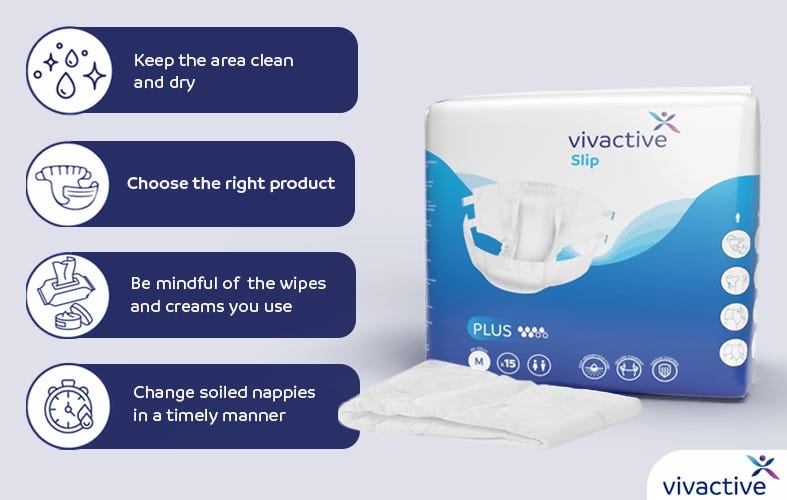
Keep The Area Clean And Dry
One of the most important components in the battle against nappy rash is keeping the affected area clean and dry. Gently cleanse the skin with mild, fragrance-free wipes or warm water and pat it completely dry before putting on a new nappy.
Many nappies feature a combination of materials; that’s how they make them so effective at holding leaks. Common materials include superabsorbent polymers, polyethylene, polypropylene, cellulose fibres, and nonwoven fabric layers that all contribute to keeping the nappy as dry as possible.
Choose The Right Product
Don’t just settle for any old nappy. Look for breathable, high-quality nappies that provide proper ventilation to the skin, reducing the risk of irritation, like nonwoven polypropylene or polyethylene for the top sheet, because they are soft, gentle on the skin, and wick moisture away quickly.
High-quality nappies should include materials and technology like superabsorbent polymers (SAPs) to lock in liquid and keep the skin dry.
Vivactive provides industry-leading nappies at a fraction of the cost of what you find in the supermarket. Vivactive’s online-only approach means all savings are passed on to you, the customer. You can check out the range below:
Make Sure Your Adult Nappy Is The Right Fit
A well-fitting product is just as important as what it’s made of. If your adult nappy is too tight, it can cause chafing and restrict airflow.
Too loose, and it may not offer the protection needed, leading to leaks and prolonged moisture.
Try different sizes or styles to find the best fit for your body shape and needs. You can work out what size nappy you’ll need by measuring your waist.
Usually size small would work for waist sizes of around 50-90cm, medium is around 80-125cm, and large 120-170cm, but be sure to check the product size guide for specifics.
If you’re at the higher or lower end of a size, try the other size and see if it fits better for you.
Change Your Used Nappies In A Timely Manner
Try not to skimp on changing nappies and incontinence products. Regular changes help keep the skin fresh and reduce the chances of prolonged exposure to moisture, which can lead to irritation.
That said, you also don’t need to change the nappy after one small leak either.
There’s an element of balance to be found here, which mainly depends on the absorbency of the nappy. But remember, always change a nappy straight away if there’s faecal matter involved.
Be Mindful Of The Wipes And Creams You Use
Fragrances, alcohol, and harsh chemicals found in some wipes and creams, such as scented baby wipes or antibacterial gels, can aggravate nappy rash and cause further irritation.
Instead, opt for gentle, fragrance-free products that are specifically formulated for sensitive skin or for people with incontinence.
Look for items labelled “alcohol-free,” “hypoallergenic,” or “dermatologist-tested,” such as water-based wipes or barrier creams containing zinc oxide or petroleum jelly.
Pat The Area Dry
After cleansing, always pat the skin dry. Avoid rubbing, as this can aggravate already sensitive skin.
Patting helps maintain the skin’s natural barrier and reduces the risk of microtears that can lead to irritation.
How To Treat Adult Nappy Rash
One of the best remedies for nappy rash is fresh air! If possible, let the affected area breathe by exposing it to the air for short periods. This can help speed up the healing process.
Barrier creams create a protective layer on the skin, shielding it from moisture and friction. Apply a generous amount of barrier cream to the affected area before putting on a new nappy.
Hydrated skin is happy skin! Drink plenty of water to keep your body well-hydrated, which can aid in the healing process and maintain skin health.
While this might seem counterintuitive if you’re incontinent, dehydrating yourself will actually make incontinence worse.
Concentrated, dark urine will irritate your bladder further. So, stay hydrated!
Products For Treating Adult Nappy Rash
There are a few products on the market that can make a world of difference if you’re suffering from nappy rash, and choosing the right skincare and protection products is half the battle won.
Here are some products that could help with nappy rash in adults:
- Barrier creams & moisturiser: As mentioned before, barrier creams are great for treating nappy rash. They form a thin layer over the skin and protect you against irritants. Creams with zinc oxide or petrolatum work very well in helping to calm and protect the skin.
- Gentle cleansing wipes: Not all wipes are created equal. Fragrance-free, alcohol-free wipes designed for sensitive skin are an excellent option for cleaning the area because they can cause less irritation. Don’t forget, you want to clean gently with no scrubbing. Always pat dry when possible. You can get dry wipes and wet wipes.
- Skin-friendly adult nappies: Some adult nappies are better for sensitive skin than others. So choose one that is designed with breathability and comfort in mind. Maybe their materials are softer or more absorbent? These can both reduce the risk of irritation.
- Healing ointments: If you’re dealing with broken or sore skin, a healing ointment can help speed up recovery. Look for products specifically formulated for irritated skin that don’t contain added fragrances or preservatives.
When To Seek Professional Aid
In most cases, adult nappy rash can be treated with home remedies and a little TLC. However, if the rash persists, worsens, or is accompanied by signs of infection such as pus, swelling, or fever, it's time to consult a healthcare professional.
They can provide a proper diagnosis and prescribe medications or ointments to help clear up the rash. If you’re in the UK, contact your GP or dial 111.
Browse Our Range Of Adult Nappies Today
Are you looking to try other adult nappy products to see if they work better for you? Then why not take a look at our complete range of disposable adult nappies?
We have products from brands such as Vivactive, Age Co, ID, TENA, and more.