


Share this page with friends

How To Build A Strong Pelvic Floor And Why It's Important


The pelvic floor is a bit of a strange one. It’s a super important muscle group for ageing well, but it’s totally invisible. Unfortunately, this means it’s often overlooked until a problem arises. In this article, we’ll explore why it’s essential to build a strong pelvic floor and how you can build a strong pelvic floor at home, while also sharing some pelvic floor exercises for incontinence support.

Building and maintaining a strong pelvic floor doesn’t require an expensive gym membership. You don’t need to go to the sports shop and buy a fancy new pair of trainers. You don’t need to huff and puff or sweat your butt off for an hour a day. But, you do need some space at home to lie down and a small helping of know-how. 

First things first, you need to know what the pelvic floor is. 

Understanding The Pelvic Floor

The pelvic floor makes up a group of muscles that form a hammock-like structure at the base of your pelvis. Your pelvic floor has several vital functions: It supports organs like your bladder, uterus, and rectum, while also maintaining continence and providing stability to your spine and pelvis. Not bad huh?

Functions Of The Pelvic Floor

our pelvic floor is a real multitasker. It might do more than you think, from controlling the release of your wee and poo to enhancing sexual satisfaction. These muscles are constantly at work. Some of the key functions include:

  • Continence control: Acts as a valve system for your bladder and bowel, letting you start and stop flow when you want/need.
  • Sexual function: Enhances arousal due to supporting blood flow and muscle tone, which can heighten sensitivity.
  • Organ support: Keeps pelvic organs lifted and correctly positioned, preventing downward strain.

Weakness In The Pelvic Floor

When the pelvic floor loses strength or coordination, this is when you can start to see the effects that can impact daily life. You might notice small things to begin with, like a little bit of leakage when laughing, but it could develop into more disruptive conditions, which is why it’s important to be seen by a healthcare professional. Weakness in the pelvic floor can result in:

  • Stress and urge incontinence: Leaks when coughing, sneezing, laughing, or sudden urges.
  • Pelvic organ prolapse: When organs (e.g. bladder, uterus, or rectum) drop downward.
  • Reduced sexual function: Less muscle tone can affect sensation due to reduced blood flow and muscle contraction strength.
  • Impacts on quality of life: Might make you want to avoid certain activities, like running or maybe even dancing, because of confidence reasons.

How To Build A Strong Pelvic Floor

So, now that you understand a bit more about the pelvic floor. Let’s take a look at how you go about building yourself a pelvic floor to be proud of. We brought in Natalie Small, a Personal Trainer and postpartum specialist, to talk through some exercises and their benefits. Grab yourself a cup of tea, sit back, relax, and watch the video below. 
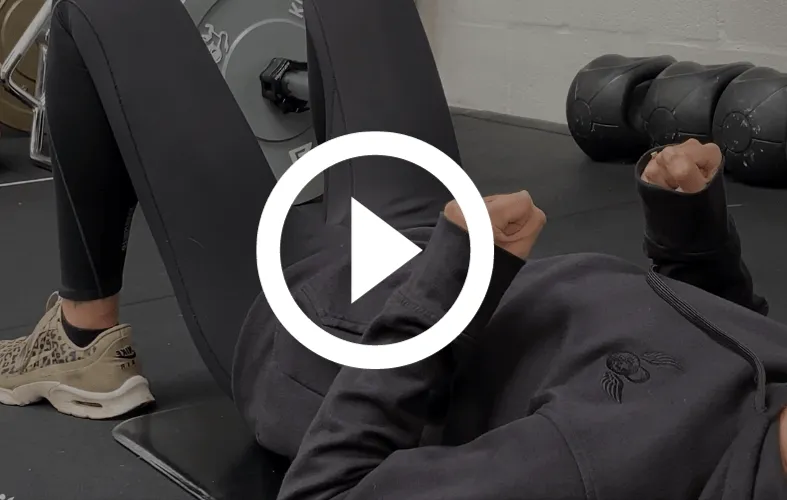
how to build a strong pelvic floor

Finding The Right Muscles

Before any exercises, it’s important to find the right muscles to work on so that you engage both the front and back parts of your pelvic floor. Here are a couple of ways you can do that:

  • Imagine stopping yourself from passing wind. When you squeeze, that’s the back part of your pelvic floor
  • For the front part of your pelvic floor, imagine you’re trying to stop your wee mid-flow.

Pelvic Floor Exercises

Building your core pelvic floor is all about strength building and reactions. We’ll also take a look at some more advanced incontinence pelvic floor exercises to prevent leaks during triggers. These methods are excellent ways to help regain control over the pelvic floor muscles.

Long contractions (For strength building)

  1. Tighten as hard as possible
  2. Hold for 3-10 seconds
  3. Relax fully for 3-5 seconds
  4. Repeat 8-10 times per set

Short contractions (Reaction training)

  1. Tighten quickly for 1 second
  2. Release immediately
  3. Repeat 10-15 times in a row

Advanced pelvic floor exercises

  • Bridge pose: Lift hips while engaging the pelvic floor
  • Squats: Drop into the squat position while keeping the pelvic floor muscles engaged
  • Bird dog: Extend your opposite arm and leg while on all floors, while engaging your core
  • Pelvic tilts: Flatten your lower back into the floor while contracting

Specialist Methods

One of the most specialised methods used to improve pelvic floor muscle control is biofeedback therapy. This technique involves placing small sensors internally or externally to measure pelvic floor activity, providing real-time feedback.

By showing exactly when and how strongly the muscles are contracting, biofeedback can help you learn to engage the correct muscles.

Biofeedback therapy is available on the NHS and is usually guided by a pelvic floor physiotherapist, so you’ll be in good hands. 

An Expert Input

We also spoke to Dr Kristal Lau, Postpartum Wellness Consultant. She shares with us some of the benefits of performing pelvic floor exercises that are sure to improve your quality of life!


"Improved self-esteem and self-confidence: Stronger pelvic floors can help with reducing urinary leakage events. Knowing that you’re less likely to experience these can help with boosting your self-esteem and self-confidence as you go about your everyday activities.

    _________________________________________________________________________________________________________

Improved sexual experience: The pelvic floor supports the sexual organs for both women and men. Having a stronger pelvic floor can help you enjoy sex better. For some women, this can also help with less painful sex.

    ___________________________________________________________________________________________________________

Return to enjoying your favourite activities! Usually, building a strong pelvic floor is done alongside building the core abdominal muscles. This is because the core muscles play a part in supporting the pelvic floor. This means having both groups of muscles strong together can help reduce back pain in some people. And best all, you’ll feel stronger overall and have more confidence to return to doing physical activities you enjoy! These include dancing, hiking, gardening, and playing with your children or grandchildren."

  ___________________________________________________________________________

Lifestyle Habits To Support A Strong Pelvic Floor

Improving and supporting your pelvic floor involves more than just exercises. It’s also the way you live your life. Simple habits, from how you eat to how you use the toilet, can have an impact on your pelvic floor.

Here are a few things to consider in your lifestyle that could help towards a healthy pelvic floor.

  • Maintain a healthy weight to reduce strain
  • Prevent constipation with fibre and hydration
  • Use a footstool when going to the toilet to reduce pressure

Importance Of Pelvic Floor Health

By understanding why pelvic floor health matters and taking the necessary steps to strengthen it, you can help limit the incontinence symptoms you’re experiencing, avoid prolapse, lower back pain, and improve your recovery from pregnancy.

Here are some key benefits of maintaining a strong pelvic floor:

1. Reduce Your Risk Of Developing Incontinence

How does an improved pelvic floor help incontinence? Well, one of the primary functions of the pelvic floor is controlling the release of your poo and wee.

Weak pelvic floor muscles can lead to leakage when sneezing, coughing, or even laughing.

Similarly, faecal incontinence, although less talked about, can also result from pelvic floor weakness. 

Building and maintaining a strong pelvic floor not only reduces your risk of developing incontinence, but it’ll also help you regain control if you’re already incontinent. 

2. Pregnancy And Postpartum Health

This one’s just for the females. During pregnancy, your body undergoes big changes. During this time, the pelvic floor experiences added stress.

Strong pelvic floor muscles can help support a growing uterus, reducing the risk of complications like pelvic organ prolapse. 

Strengthening these muscles after giving birth helps with recovery and helps to prevent long-term issues, such as stress urinary incontinence. You can read all about postpartum leakage here.

3. Preventing Prolapse

You know earlier on when we mentioned the pelvic floor supports a bunch of organs? Well, your pelvic floor prevents them from descending or prolapsing into the vaginal or rectal area.

Organ prolapse can cause discomfort, pain, and the need for surgical intervention. 

This happens when the pelvic floor muscles and connective tissues become weak and can’t hold the organs in place. There’s a range of things that can cause this, from pregnancy and childbirth to heavy lifting, chronic coughing and ageing.

Basically, because of the weakness, it causes organs like the bladder, uterus, or rectum to press downwards, which can cause a bulge and discomfort/pain.

4. Back And Pelvic Stability

Beyond maintaining continence and keeping your organs in place, a robust pelvic floor can contribute to overall body stability.

These muscles work with the abdominal (like the transverse abdominis) and back muscles (multifidus) to support the spine and pelvis.

A weak pelvic floor can lead to issues like lower back pain and pelvic instability, affecting your mobility and quality of life.

visual demonstration of a strong pelvic floor - a gusset is holding oranges

Maintaining A Strong Pelvic Floor

In addition to the exercises outlined in our video, positive lifestyle choices can help maintain pelvic floor health. Keeping a healthy weight and avoiding smoking can reduce the risk of weakening these muscles. Smoking and the coughing it causes can put added pressure on the pelvic floor, leading to muscle damage over time. The Guardian recommends:

  • Keep up with the pelvic floor exercises
  • Download an app such as the NHS Squeezy app
  • Maintain a healthy weight
  • Learn to lift heavy weights and objects correctly
  • Take up pilates as it helps to strengthen the core muscles

When To Seek Professional Help

If you’re symptoms aren’t improving, or if you just think something feels ‘off’, then it’s best to get checked out. A GP can assess your specific situation and point you in the right direction.

They can check that you’re activating the right muscles and also rule out any underlying conditions.

Early intervention is key and can save you from long periods of discomfort and symptoms. 

Here’s when you should definitely seek help from a professional:

  • You’re seeing no improvement after many months
  • Your symptoms are becoming worse and are painful
  • You have pelvic pain, sexual dysfunction, or prolapse symptoms (e.g. a feeling of heaviness or discomfort in the lower tummy area).
  • You think you could have an overactive (hypertonic) pelvic floor —when your pelvic muscles are too tight and you’re unable to relax properly. Symptoms can include pelvic pain, difficulty weeing, and mixed urinary incontinence.

Take The Next Step In Protecting Your Pelvic Health

Strengthening your pelvic floor is an important step towards improving your continence. Practising some of the exercises we’ve mentioned can help you build strength and regain control. Sometimes, additional support can make a massive difference.

Whether you’re starting out looking for practical solutions to your symptoms, these proactive steps can help you feel more confident and comfortable.

At Incontinence Choice, we have a range of products designed for everyday support and protection. For men, check out our male incontinence products, and for women, see our female incontinence products.

We also stock a variety of incontinence pads to suit different needs, helping you to stay secure.