

Share this page with friends
Managing Incontinence At Work
Incontinence is still viewed as something that only affects older people, but this simply isn’t true.
There are people out there from all walks of life experiencing bladder weakness and bowel problems, and many of them are of working age.
If you’re reading this right now, there’s a good chance you’re one of those people.
Welcome! In this article, we’ll be taking a look at how you can manage your incontinence at work, along with some helpful tips!
Types Of Incontinence
Before we get into how to manage incontinence at work, it’s probably best to explore the different types of incontinence that people experience, whether it be urinary or bowel.
If you’re experiencing incontinence symptoms and you’re not sure what could be causing it, then this might help you better understand. However, it’s always best to get yourself to the GP for a proper assessment and diagnosis.
- Stress incontinence: A common form of incontinence where physical pressure (from things like coughing, exercising, laughing, etc.) causes the bladder to leak urine.
- Urge incontinence: Symptoms include the immediate need to urinate and are caused by an overactive bladder, which can be linked to a variety of things like abdominal trauma, infection, neurological conditions and bladder irritants such as caffeine.
- Overflow incontinence: This happens when the bladder doesn’t fully empty after going to the toilet, which can lead to dribbling of urine, even after urinating. This can be caused by an obstruction or weakened bladder muscles.
- Functional incontinence: This is where physical or cognitive limitations impact your ability to get to the toilet in time. These could include mobility issues (e.g. arthritis, or being in a wheelchair) or cognitive reasons (e.g. dementia).
- Mixed incontinence: Mixed urinary incontinence (MUI) is when somebody experiences both stress and urge incontinence symptoms.
- Bowel incontinence: Also known as faecal incontinence, bowel incontinence is when somebody experiences accidental or involuntary passing of stool or gas, ranging from leakage when passing gas to complete loss of bowel control. This can be caused by different reasons, such as muscle or nerve damage, inflammatory bowel disease (IBD), and ageing.
How Incontinence Affects People At Work
Even though incontinence is a private medical issue, it quite often follows us into our work. The physical symptoms are one thing, but the emotional impact can be just as challenging.
A survey conducted in the US showed that 88% of respondents who were women with the most severe symptoms said that their symptoms impacted “concentration, performance of physical activities, self-confidence, or the ability to complete tasks without interruption”.
Here are some of the ways incontinence can impact people’s lives at work.
Awkwardness
Some people living with incontinence may be embarrassed to talk about it. This can lead to isolation, fear of judgement, and even avoidance of certain work situations altogether, such as meetings, presentations, or travel, which can affect performance and progression.
The worry of leaks or odours can be constantly on people’s minds, making it difficult to fully focus on tasks.
Frequent Toilet Breaks
When you’re navigating incontinence at work, frequent trips to the toilet can become the norm.
This might make you feel self-conscious, especially if you work in an open-plan office or have a job where stepping away regularly isn’t always easy.
The fear of ‘being noticed’ can add unnecessary pressure to an already stressful situation. But don’t worry, there are solutions to this which we’ll cover in the next section.
Can Impact Physical Labour Work
Jobs that involve heavy lifting, bending, or lots of physical movement can make incontinence harder to manage.
Certain motions can put extra pressure on the bladder or bowel, increasing the risk of leaks.
For those working in trades, warehouses, healthcare, or any role that demands physical labour, extra planning and protection are even more crucial.
How To Manage Incontinence At Work
The good news is that with some forward planning, practical strategies, and the right products, dealing with incontinence at work can be stress-free!
By taking a few simple steps now, you can feel more prepared, confident, and ready to face the working day without constant worry.
Here’s how you can take control.

Plan Ahead And Be Prepared
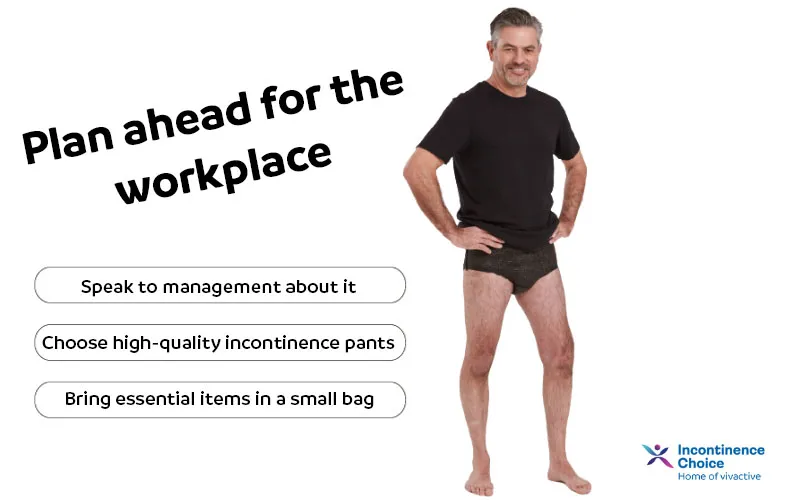
Planning ahead is your first step to avoiding accidents and leakage at work. Start by identifying the triggers that are causing you to leak and take a note of how often it's happening and how much. Having a strong understanding of your body will help you create a proactive strategy.
- Once you’ve got everything written down, you might be able to identify some trends. For example, you notice yourself having the sudden urge to use the toilet after your morning cup of coffee, but there’s no decaf option in the office. Speak to your line manager and see if there’s anything they can do to help.
- Choose high-quality adult incontinence products that provide reliable protection against leaks and odours. Make sure they’re comfortable and discreet, so you can approach every workday with confidence.
- Bring an incontinence care package with you. I can hear you thinking, “What on Earth is a care package?”. It’s a small, discreet bag that you can take with you, containing essential items like incontinence pads, wet wipes and a change of underwear. Being fully prepared with spares can alleviate some anxiety if you do happen to have an accident at work.

Communicate With Management
Times have changed, incontinence is nothing to be ashamed of. People are talking about their problems more and more, especially incontinence.
Open communication is crucial in the workplace, it’s where we spend a massive chunk of our day. Consider confiding in a colleague that you trust, your manager, supervisor, or HR rep who can offer support and understanding.
By sharing your situation, you can ensure that you get the help you need, fostering a supportive work environment.
After all, the Equality Act 2010 says that employers must make reasonable adjustments for employees, workers, contractors and job applicants when:
- they know, or could reasonably be expected to know, someone is disabled
- a disabled staff member or job applicant asks for adjustments
- someone who's disabled is having difficulty with any part of their job
- someone's absence record, sickness record or delay in returning to work is because of, or linked to, their disability
Talking openly about things might also help anyone around you who is experiencing incontinence (or any issue for that matter) and is feeling embarrassed or ashamed. You can be the change you want to see.
Having an honest conversation could lead to practical adjustments, such as:
- Extra or more flexible toilet breaks to help you manage sudden urges.
- A workstation closer to the toilets for quick and discreet access.
- Access to a private area where you can change clothes or freshen up if needed.
- Flexible working hours if you need to go to medical appointments or manage flare-ups.
- Permission to keep an emergency kit in a convenient place, like your desk or a staff cupboard.
Manage Your Stress Levels
Here are a few stress relieving techniques to try:
- Deep breathing exercises: For example, try inhaling slowly through your nose for four counts, holding for four, and exhaling through your mouth for four to help calm your nerves.
- Mindfulness meditation: This could be as simple as spending five quiet minutes focusing on your breath and letting go of racing thoughts before starting a busy workday.
- Take short breaks from your desk to relax and recharge: You could go for a 5-minute walk and take a drink of water.
Dress With Incontinence In Mind
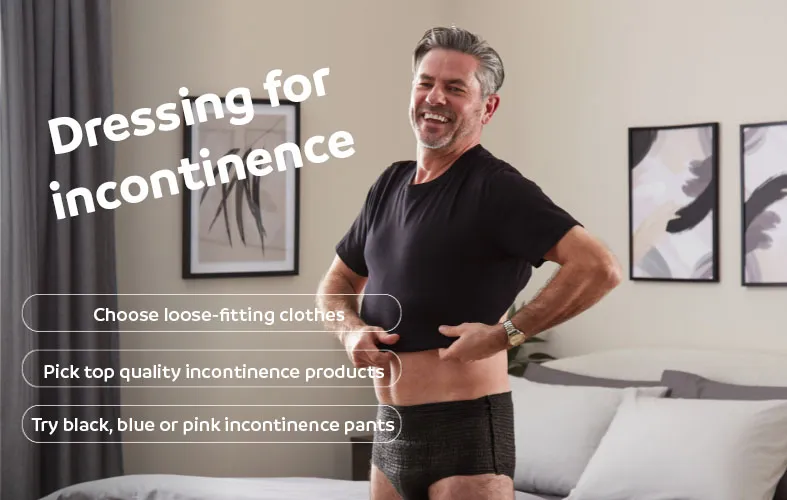
Choosing the right outfit can make a big difference when it comes to managing your bladder and bowel problems discreetly. By picking the right fit, you can minimise discomfort and anxiety whilst maximising confidence and comfort. So, what clothes to choose as someone with incontinence?
- Choose loose-fitting clothes: If you’re having trouble managing your bladder weakness, then it’s probably best not to put too much pressure on that area. Ditch the super tight trousers and loosen that belt, give your bladder room to breathe.
- Pick a top-quality, reliable and discreet incontinence product: Nowadays, you can get incontinence products that are slim, absorbent, and look just like normal underwear, with white, black, blue, or even pink pants. Nobody will ever know!
- Black, blue or pink pants: When we think of incontinence pants, the first colour that pops to mind is white. If you want to add even more discretion to your pants, why not consider going for a black or blue colour instead? Nobody will ever know!
Consider Pelvic Floor Exercises
For many people, strengthening the pelvic floor can help manage or even improve certain types of incontinence. Pelvic floor muscles act like a supportive sling for the bladder, bowel, and, in women, the uterus.
When these muscles are weak, which can happen because of ageing, pregnancy, childbirth, or simply lack of use, they can struggle to keep the bladder and bowel properly supported, which may lead to leaks.
Kegel exercises, which involve squeezing and releasing the muscles you’d use to stop the flow of urine midstream, are an effective way to build this strength over time.
By regularly contracting and relaxing these muscles, you improve their tone and endurance, which helps them react better under pressure, like when you cough, sneeze, laugh, or lift something heavy.
See our blog on how to build a strong pelvic floor and why it’s important for more guidance and techniques on this.
Continue To Drink Water
It’s tempting to cut back on fluids to reduce leaks, but this can actually make things worse. Not drinking enough water can lead to concentrated urine, which irritates the bladder and increases urgency.
Aim to sip water regularly throughout the day rather than gulping it down all at once. If you’re worried about your fluid intake, speak to a healthcare professional for advice tailored to your needs.
Use Absorbent Incontinence Products
Investing in the right absorbent products is one of the most practical ways to feel confident and protected when dealing with incontinence at work.
Good incontinence products are designed to keep you dry, neutralise odours, and stay secure for hours at a time.
It’s important to choose the level of absorbency that matches your needs, for example, lighter liners for occasional drips or heavier pads and pants for more frequent leaks.
Having a few spares tucked away in your bag, desk drawer, or locker can make all the difference if you need to change during the day.
Here are some products to consider:
- Incontinence pants: Discreet, pull-up style underwear that feels like normal pants but provides protection for moderate to heavy leaks.
- Incontinence pads: Ideal for light to moderate leaks, they stick inside your regular underwear and can be changed easily during the day.
- Adult nappies: Suitable for more severe incontinence or if you need extra protection throughout long shifts or travel.
- Liners: A slim, discreet option for very light bladder leaks or drips, often chosen for mild stress incontinence.
Sit Closer To The Toilet If Possible
If you’re able to choose your desk or workstation, ask to sit near the toilets if that would make you feel more comfortable.
This simple step can ease anxiety and help you reach the toilet quicker when you need to go.
For jobs that require moving around, like retail or warehouse work, you could speak with your supervisor about access to nearby staff toilets or extra breaks.
Browse Our Range Of Discreet Incontinence Products
Whatever your situation, remember that you’re not alone.
With the right products, a bit of planning, and open conversations, dealing with incontinence at work doesn’t have to hold you back.
If you’re looking for reliable, discreet solutions for managing incontinence at work, you’re in the right place.
We offer a wide range of high-quality male and female incontinence products to help you feel secure and confident throughout the working day.