


Share this page with friends
How to correctly wear your incontinence pads
Incontinence pads are a super popular choice for people experiencing incontinence or bladder weakness. They’re pretty versatile and can carry a large absorbency making them a solid all-rounder. Whether you’re looking for information on how to wear male incontinence pads, or female incontinence pads, there are two different types of disposable incontinence pads for you to consider, each of them with its own benefits. Every person’s experience with urinary leakage is different, so we carry a range of products to meet a wide range of needs.
'How to wear incontinence pads' is one of the most common questions for adults experiencing urinary incontinence. And for good reason, they're not the easiest things to figure out. Especially if you've recently embarked on your bladder weakness journey. Wearing your pads correctly is important if you want to stay dry and get the most out of your product.
What are the different types of incontinence pad?
‘Incontinence pads’ serves as a broad term that covers two main varieties of pad: large-shaped pads and discreet pads. Unlike some other incontinence products, pads need manual placement and are secured with adhesive strips. The larger-shaped pads typically pair with fixation pants for added security, while discreet pads are typically worn with regular underwear.
Large Shaped Pads:
Large-shaped pads are a heavy-duty option, built specifically to handle big leaks. Their huge absorption capabilities and traditionally bulky design mean they’re geared mostly toward people with chronic incontinence and people who are less mobile.
Discreet Pads:
Discreet pads, as you may have guessed by the name, are built with discretion in mind. They tend to be smaller than large-shaped pads and are usually worn inside your regular underwear. The absorbency levels of discreet pads are lower than what you might find with large-shaped pads, but what they lack in absorbency they make up for in discretion and mobility.
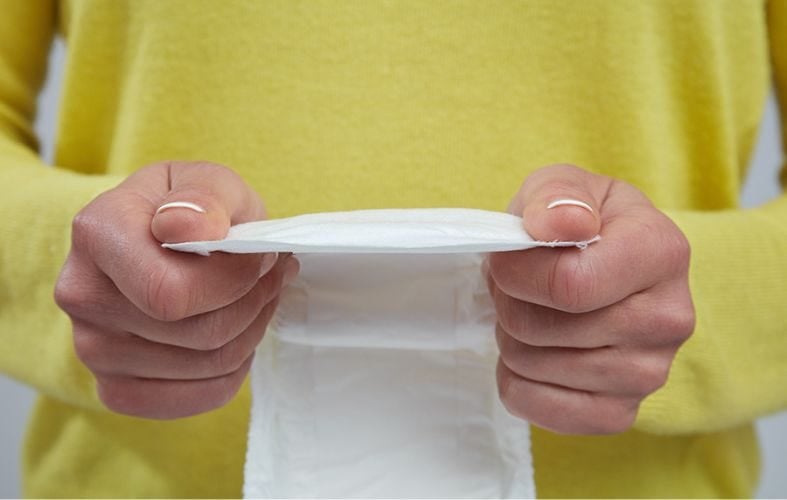
Things to know before wearing your incontinence pads
Before you spend your entire evening on Google, scrolling frantically, some simple preparations can help you manage urinary incontinence more easily. While most common in older women, it's important to remember that both genders may experience it at any age. When buying your incontinence pads, you must;
- Choose a reliable brand known for affordable products, exceptional quality, and superior absorbency.
- Find the right size of incontinence pads to ensure that you can gain a snug fit.
- Select the right absorbency levels so that it can satisfy your needs without causing issues like skin irritation.
Other top tips for wearing your incontinence pads include changing them when they're full (not just after a small leak!) and making sure they feel comfortable before leaving the home.
How to wear incontinence pads
Whether you need incontinence pads for nighttime due to nocturnal enuresis or in the daytime, it’s vital that you learn how to fit them. If you’re thinking 'what happens if my pad isn't fitted correctly?', the most likely answer is leakage. However, sores may also develop while odours are commonplace too.
To wear your incontinence pads without worrying about leaks or discomfort, you should follow these simple steps:
- Pull up fixation pants to your knees: Pull the pants that you wish to wear with your pads (we suggest specifically designed Fixation pants for the best results) up to just above the knees.
- Open the incontinence pad: Open the incontinence pad and fold it lengthways until a cup is formed by the anti-leak cuffs.
- Place the pad between your legs: Ease the pad between your legs, from front to back with the backsheet facing away from the skin.
- Position: Position the pad centrally within your Fixation pants, ensuring that the larger end is towards the buttocks. Position the pad to ensure that the front end lifts up towards the abdomen and the back is up to the cleft of your buttocks. Confirm that the front of the pad sits higher up than the back while checking that the anti-leak cuffs are snug to the groin.
- Pull the fixation pants up and over the pad: Pull up the pants to fit securely over the incontinence pad, which should still fit snugly to the groin area.
- Smooth out the pants and pad: Smooth out the pants and pad to prevent creases and check that the front of the pad is still higher than the back.
After completing the above steps of this incontinence pad fitting guide, it is also important to make sure you're comfortable when seated and standing. Take a minute to make sure that the material won’t rub against the skin or cause irritation.

What happens if my pads are too big?
Now that you’ve got your pads on properly, it might be a good time to think about whether or not you’re in the right size. If you’re wearing pads that are too big, you might find:
A poor fit: A pad that is too large may not fit your body properly, leading to discomfort and potential leakage.
Ineffective security: If the pad is too big, it may leave gaps in places. This will mean they’re not able to effectively contain urine, leading to leaks and accidents.
Chafe: Oversized pads can cause chafing and irritation when they rub against the skin.
Visible Bulk: Large pads may be visible under clothing. If you’re trying to remain discreet, you might find it more difficult if they’re too big.
To avoid these problems, it's important you choose a size that fits your body properly. You may need to try different sizes or styles to find the one that offers the best fit and protection for your needs.
What happens if my pads are too small?
Disposable incontinence pads that are too small can cause problems too.
Insufficient coverage: A pad that is too small may not be wide enough to collect up the liquid effectively, leading to leaks.
Limited absorption: Smaller pads may have a lower capacity for absorbing urine, resulting in more frequent changes or again, leakage.
Ineffectiveness: Small pads, if not fastened correctly, may not stay in place properly, leading to shifting and potential leakage.
Worried about the sizing of your pads? Take a read of our blog ‘Pads, pants & adult nappies: top tips to get the right fit’ for some helpful information.
Try Vivactive incontinence pads
Now that you’re clued up on how to wear incontinence pads, if you’re looking for a budget brand that packs a big punch, look no further. The Vivactive ethos is all about providing premium quality items to rival the big brands, but at a fraction of the cost.
With products such as Vivactive Pull Up Pants, Vivactive Adult Nappies, and more, you’ll be sure to find the right product for you.